Tuesday, August 31, 2010

Bee Log 46: August 31, 2010


Wild Aster by Green Lake
Good bee food


Mimosa Tree
Attractive to bees


Japanese Knotweed
Very invasive, non-native species but the bees love it. The honey is very dark.


Drone larva on a white plate that were disected out of some brood comb that was culled from a hive. The black spots are varroa mites that were on the brood.

The last time that we went into the hives to collect honey (August 23), we did not find as much honey as we expected. Evidently, there was not a whole lot for the bees to eat after the linden trees stopped blooming and before the Japanese knot weed started to bloom.

We are selling honey at the Phinney Farmers' Market and the Bothell Farmers' Market along with selling to neighbors and friends. The honey supply is ok but not abundant. We hope for some nice weather on Thursday Sept. 2 when we will start to look in the hives again for some more honey to harvest.

School starts soon and my husband and I get back to our day jobs as teachers.

Tuesday, August 10, 2010

Bee Log 45: August 10, 2010


At last we have honey to sell at the Phinney Farmers' Market on Friday nights from 3 to 7pm. Look for us there.


My husband uncapping a frame of honey. Note the dark honey in the center of the frame. The bees were collecting from two different flowers.


The extractor with a frame of honey inside.


The garden is producing despite the cold summer that we have had in Seattle. Shown is an orange cauliflower.


Six year old Belle wants to be a beekeeper. Her parents brought her over to our house to look at the beehives. The bees were a bit scary but that did not deter her interest. I have to admit that I am a little afraid of the bees too. One should respect a stinging insect with a powerful venom inserted with a barbed needle connected to a pumping device.

All of our bee suits were all hopelessly too big for tiny Belle. It was raining so we had a really good excuse not to look inside a live hive. We did watch the bees at the entrance of the hive for awhile. We also looked at an empty hive with frames inside and at our honey extractor.

I hope that this interest in bees will grow into a lifelong hobby or business. One never knows with a 6 year old. One must be careful not to discourage good things because of youth.

Tuesday, July 6, 2010

Bee Log 44: July 6, 2010


Solar Wax Melter

My husband built a solar wax melter. It is a box painted black inside with a window. The window is in a frame that is attached to the box with hinges. The box is setting in a wheel barrow so that it is tilted toward the sun and can be turned as the day progresses. The box is large enough to hold queen excluders which the bees are always clogging with wax.


Wax Moth Larva

One of the banes of beekeepers is the wax moth. We are processing our wax just in time because the wax has some wax moth larva in it. Up until now we have not seen this pest. You can see two wax moth larva in the above picture.


Our Garden on July 6, 2010 Two Beehives in the Background

Finally the sun has come out in Seattle. The bees are flying with intensity. The blackberry honey flow is almost over. Clover is blooming and will be a major source of honey for the next few weeks as will lavender. We were not able to be at the Phinney Farmers' Market on July 2 because there was no honey to take from the bees. We might not make this weeks market either. The bees are storing honey in the supers (top of the hive where excess honey is stored) but there is not enough capped honey to make it worth our while to extract and bottle the honey to sell. We will check again on Wednesday and make a final decision for this weeks market.

Thursday, July 1, 2010

Bee Log 43; July 1, 2010


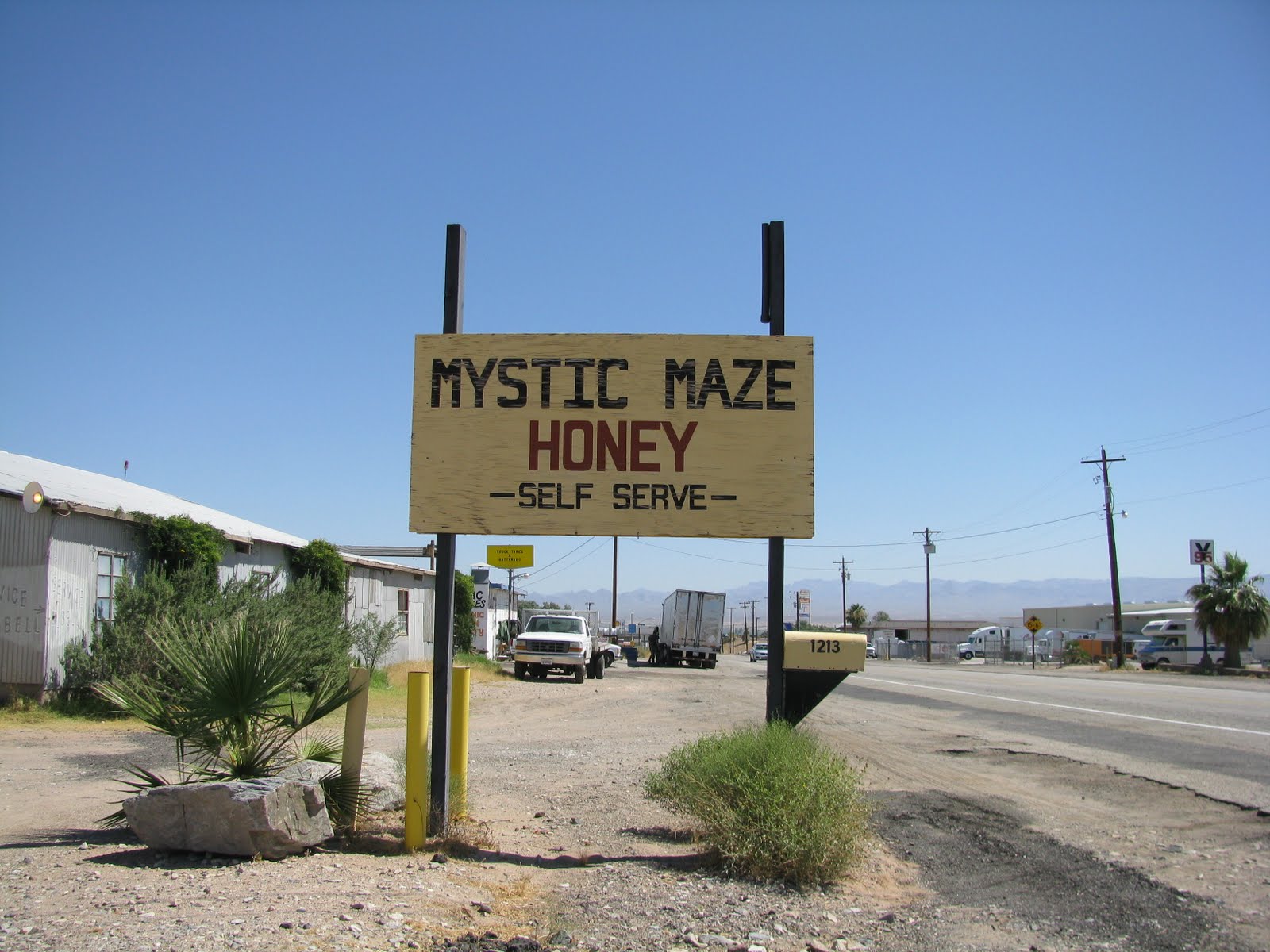
In mid-June, we drove from Chicago to Los Angeles with our daughter who was moving from the mid-west. We stopped and bought honey from Mystic Maze Honey located in Needles, CA.


Honey was sold on the honor system out of this trailer.


This coyote was walking along just across the road from the honey sales trailer.


Our bees about June 10.

We do not have any honey to take from the bees yet. We will not be at the Phinney Farmers' Market on July 2. We hope to have honey to harvest for the July 9 market. Only two hives our of our 19 hives have some capped honey in the supers. When the bees are finished dehydrating the nectar that they have collected, they cap it with a thin coat of wax. This protects and preserves the honey. This is our signal that the honey is ready to harvest. The super is a box on top of the beehive meant for surplus honey storage. We only take honey from the super leaving any honey in the brood box for the bees.

This cold, wet weather we are having in Seattle is hard on the bees. We have had swarms but the new queens have not had warm enough weather to mate (70 degrees needed). We have purchased mated queens and placed them where needed.

The main nectar flows in western Washington are big leaf maple and blackberry. Maple is long gone and blackberry is blooming right now. Lavender will be next in our area of Seattle along with many garden herbs. Watch to see what the honey bees are visiting in your yard. Let me know what you see.

Thursday, June 24, 2010

Bee Log 42: June 24, 2010


My husband is showing a guest our bees. This young lady and her grandmother spend the afternoon with us looking at the bees and eating hamburgers. She showed a great deal of courage after she got stung through her jeans by going right back to look at some more hives.

Seattle has had a wet cold spring with lots of rainy days. The bees are not collecting much honey yet. We are hoping to be ready for the Phinney Farmers' Market on July 2 but I don't think we are going to have honey by that date. Some of the bee hives look like they are really low on food which is strange this time of year. We have had a few nice days this week so maybe the bees will be able to gather some of the currently abundant blackberry nectar flow.

Friday, June 11, 2010

Bee Log 41: June 10, 2010

In early April, we moved a mature hive to a yard in Bellevue just before the cherry trees were in bloom. That hive got really mean and aggressive and had to be requeened about a month ago. Aggression in bees is a matter of genetics and the queen is the mother of all of the bees in a hive. Aggressive bees are dangerous to have around. Yesterday we got into that formerly mean hive and found a brood box (lower part of the hive), full of eggs and larva. A bee lives for about 6 weeks in the summer so there were still some aggressive guard bees in the hive but nothing like the buzzing attacks we experienced in mid May. Then, the guard bees would follow us away from the hive. We had to walk into the deep shade and wait for them to leave us alone before we could take our bee suits off. On this visit, no bees followed us as we left the hive.

We also saw honey in that hive!!!! The bees have one super (upper part of the hive where the surplus honey is stored) almost full of honey and capped. Capping is the final step in honey production for the bee. It is a thin coat of wax over the ripe honey.

I am so glad to see honey. We have worked through some problems this spring that we have never had before. I started to wonder if the bees would store a surplus that we could take. This spring, we have seen drone laying workers, drone laying queens, queens missing in action and queens with mean genetics along with swarms that left behind hives with new queens that couldn't mate because it was too cold and rainy.

We are thrilled and thankful that the requeening of the mean hive went so well. The two hives in our own yard that we requeened in April seem to be building up a good population but aren't storing surplus honey yet. We requeened 5 more hives almost a week ago and the new queens should be out of their cages now and starting to lay eggs. There is a candy plug in the queen cage that the workers eat through to let the new queen out. The bees need to be introduced to new royalty slowly or they will kill the new monarch.

I will try to get some more pictures so you can see the things that I am describing.

Monday, June 7, 2010

Bee Log 40: June 7, 2010

This is the year of the queen installation. We bought 5 queens at Beez Neez on Saturday and installed them all. I think the problem is that the weather has been too cold for the queens to get out and mate. It needs to be 70 degrees at least. We have not had many days that warm this spring. In some hives, the bees are even having trouble bringing in enough feed for their young. We have had one swarm in the last month that I know about. I suspect another. We split one hive that had a brood box of 3 deeps and was only producing drones. The swarm that I collected was without a fertile queen. If the new queen developing in hive from which the swarm issued does not get out to mate within a certain time period, the hive will not have eggs or larva.

This is not a good bee year. March was so warm that the bees swarmed. We put supers on our hives in March. April and May have been cold and rainy. With supers on the hives, we have not been able to feed the bees. The bees that we started this year in yards around Seattle are doing well because we have been feeding them.

We are getting concerned that we will not have honey for the market on July 2. This is the date that we are supposed to start selling. We will see. The blackberry flow is just starting in Seattle and that could yield significant honey if the weather cooperates. The black locust trees are blooming now and the lavender is starting to bloom.

I am starting to sound like my farmer grandfather!!! He made a living on 120 rock strewn acres in northeastern Iowa. He raised hogs, corn, soy beans, oats, hay and dairy cattle. There were always worries about the weather, the prices or bacteria counts in the milk. Pay days were few and far between. He couldn't count on pay days even happening.